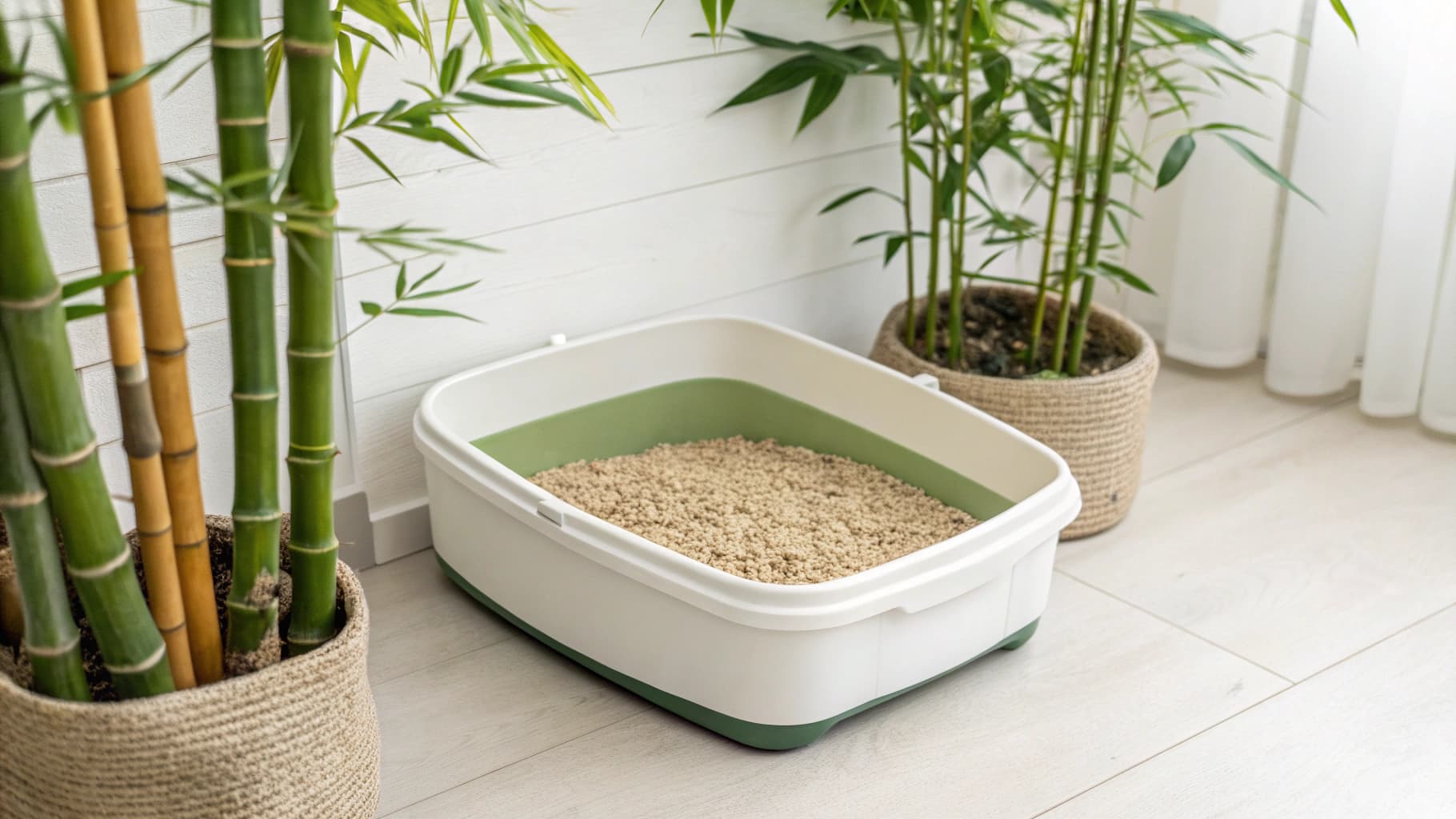
Bamboo Cat Litter: The Complete Guide
Bamboo is Earth's fastest-growing plant. Now it's revolutionizing how we think about cat litter.
Quick Facts
What is Bamboo Cat Litter?
Bamboo cat litter is made from processed bamboo fibers, typically using the parts of the bamboo plant that would otherwise go to waste during manufacturing. Unlike traditional clay litter that requires strip mining, bamboo is a rapidly renewable resource that can be harvested without killing the plant.
Bamboo grows incredibly fast—some species can grow up to 35 inches per day. This makes it one of the most sustainable raw materials on the planet. When processed into cat litter, the natural bamboo fibers create excellent absorption and clumping properties.
Environmental Benefits
The environmental case for bamboo litter is compelling:
- Renewable resource: Bamboo regrows from its root system after harvesting, unlike trees that must be replanted. A bamboo grove can be harvested indefinitely.
- Carbon negative: Bamboo absorbs more CO2 than equivalent trees and releases 35% more oxygen. Using bamboo products effectively stores carbon.
- No pesticides needed: Bamboo naturally resists pests and disease, requiring no chemical treatments during cultivation.
- Prevents erosion: Bamboo's extensive root system prevents soil erosion, unlike strip mining for clay which devastates landscapes.
- Fully biodegradable: After use, bamboo litter breaks down naturally in weeks rather than centuries.
Pros and Cons
Advantages
- Extremely low dust
- Lightweight (easier to carry)
- Excellent odor control
- Soft on cat paws
- Often flushable
- Compostable
- Sustainable source
Disadvantages
- Higher upfront cost
- Less available in stores
- Some cats need adjustment time
- Clumps can be softer than clay
- May track slightly
How Bamboo Litter Compares to Clay
The differences between bamboo and traditional clay litter go beyond just environmental impact:
Weight: Bamboo litter is significantly lighter than clay—often 50% or more. A bag that would weigh 40 pounds in clay might weigh only 15 pounds in bamboo. This makes it easier to transport and pour.
Dust: Clay litter, especially the clumping varieties, produces fine silica dust that can irritate both human and feline respiratory systems. Bamboo produces virtually no dust, making it ideal for cats with asthma or allergies.
Odor control: While clay relies on added fragrances and chemical deodorizers, bamboo has natural antimicrobial properties that neutralize odors at the source. For even stronger odor control, many bamboo litter users add an activated carbon supplement to their litter boxes.
Longevity: Many users report that bamboo litter lasts longer than equivalent amounts of clay, partially offsetting the higher purchase price.
Tips for Switching to Bamboo Litter
Cats can be particular about their litter. Here's how to make the transition smooth:
- Gradual transition: Mix 25% bamboo with 75% old litter for the first week. Increase bamboo by 25% each week until fully transitioned.
- Maintain depth: Keep the same litter depth your cat is used to—typically 2-3 inches.
- Same box location: Don't move the litter box during the transition period.
- Watch for signs: If your cat starts avoiding the box, slow down the transition. Some cats adapt in days, others need weeks.
Is Bamboo Litter Right for Your Cat?
Bamboo litter works well for most cats, but it's especially beneficial for:
- Cats with respiratory issues or allergies (low dust)
- Senior cats who appreciate softer textures
- Kittens (safe if accidentally ingested)
- Multi-cat households (excellent odor control)
Some cats that strongly prefer fine-grained clay textures may need a longer adjustment period or may prefer other eco-friendly options like corn or wheat litter which have more similar textures.