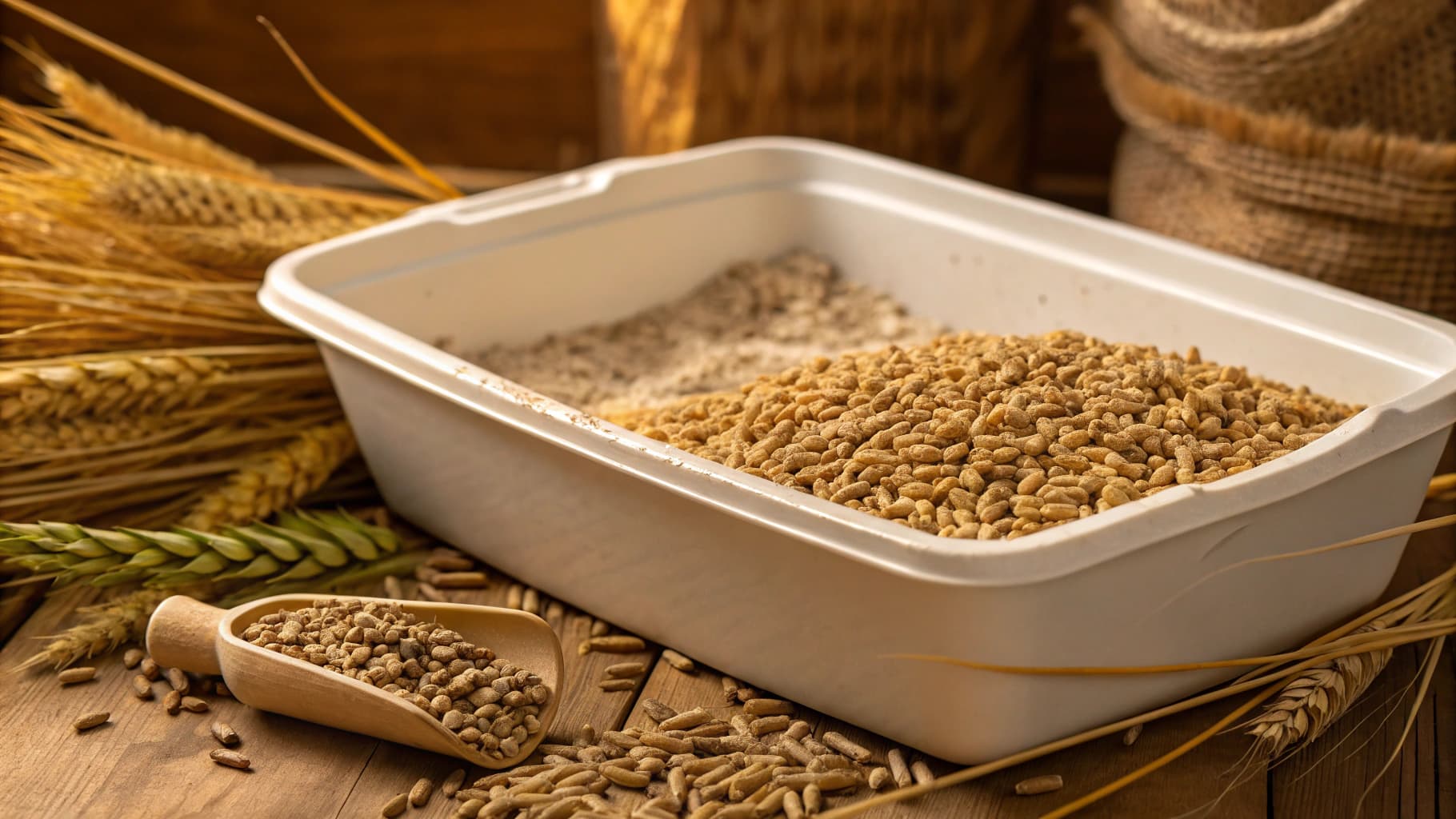
Wheat Cat Litter: Enzyme-Powered Performance
Natural wheat enzymes neutralize odors at the molecular level, making this one of the most scientifically-backed eco-friendly options.
Quick Facts
What is Wheat Cat Litter?
Wheat cat litter is made from processed wheat—typically secondary-grade wheat that doesn't meet standards for human food or animal feed. The wheat is ground, processed, and often combined with natural starches to create a clumping litter with unique properties.
What sets wheat apart from other grain litters is its natural enzyme content. These enzymes actively break down odor-causing compounds rather than simply absorbing or masking them—a fundamentally different approach to odor control.
The Science of Enzymatic Odor Control
Wheat contains natural enzymes that break down urea—the compound in cat urine that converts to ammonia and creates that distinctive litter box smell. When urine contacts wheat litter, these enzymes begin breaking down urea before it can become ammonia. This enzymatic action continues working over time, which is why wheat litter often seems to get better at odor control the longer you use it (up to a point). The enzymes are doing their job continuously, not just at first contact. For multi-cat homes wanting extra odor protection, pairing wheat litter with an activated carbon supplement creates a powerful dual-action system.
Clumping and Texture
Wheat litter forms solid clumps thanks to natural wheat starches that activate when wet. The clumping action is similar to corn litter, though some users report wheat clumps as slightly firmer.
The texture of wheat litter is:
- Fine-grained, similar to premium clumping clay
- Soft underfoot, comfortable for cat paws
- Light tan or golden color (natural wheat color)
- Lightweight compared to clay
Most cats transition easily from clay to wheat because the texture and behavior are so similar.
Pros and Cons
Advantages
- Enzymatic odor control
- Excellent clumping
- Flushable and septic-safe
- Low dust
- Easy transition from clay
- Safe if ingested
- Lightweight
Disadvantages
- Not for gluten-sensitive households
- Can attract pantry pests
- Higher cost than clay
- May mold if stored wet
- Some tracking
Wheat vs. Corn: The Grain Debate
Corn and wheat are the two most popular grain-based litters. Here's how they compare:
Odor control: Wheat's enzymatic action gives it an edge for sustained odor control. Corn absorbs but doesn't actively break down odors.
Clumping: Both clump well. Wheat clumps tend to be slightly firmer; corn clumps can be softer but form faster.
Safety: Both are safe if ingested. Choose based on any food sensitivities in your household (wheat contains gluten; corn doesn't).
Price: Usually comparable, though both cost more than clay.
Availability: Corn litter is slightly more widely available; wheat may require specialty pet stores or online ordering.
Flushability and Disposal
Wheat litter is generally flushable and septic-safe. The wheat fibers break down easily in water, much like toilet paper. However:
- Flush small amounts: Large clumps can overwhelm older plumbing. Break them up and flush with plenty of water.
- Don't flush feces: Cat waste can contain Toxoplasma gondii, which water treatment doesn't fully remove. Solid waste goes in the trash.
- Check local regulations: Some areas prohibit flushing any pet waste, regardless of the litter type.
- Composting works too: Wheat litter composts quickly in a proper setup (urine-soaked litter only, no feces).
Storage and Pest Prevention
Because wheat is a food product, proper storage matters more than with clay:
- Store in a cool, dry place in a sealed container
- Keep away from areas prone to pantry pests (moths, weevils)
- Don't store in humid basements or garages
- Check expiration dates—old wheat litter may lose enzyme effectiveness
- Discard any litter that develops an off smell or visible mold
Best Uses for Wheat Litter
Wheat litter is an excellent choice for:
- Cat owners who prioritize odor control: The enzymatic action provides sustained odor fighting.
- Apartment dwellers: Flushability means no smelly trash bags.
- Households seeking easy transition: Similar texture to clay makes switching simple.
- Environmentally-conscious families: Renewable, biodegradable, and made from a common crop.
A Note on Gluten
Wheat contains gluten, which may be a concern for households with celiac disease or severe gluten sensitivity. While cats aren't affected by gluten, the dust from pouring and scooping wheat litter could potentially cause reactions in highly sensitive individuals.
If gluten is a concern, consider corn or grass litter as gluten-free grain alternatives with similar performance.