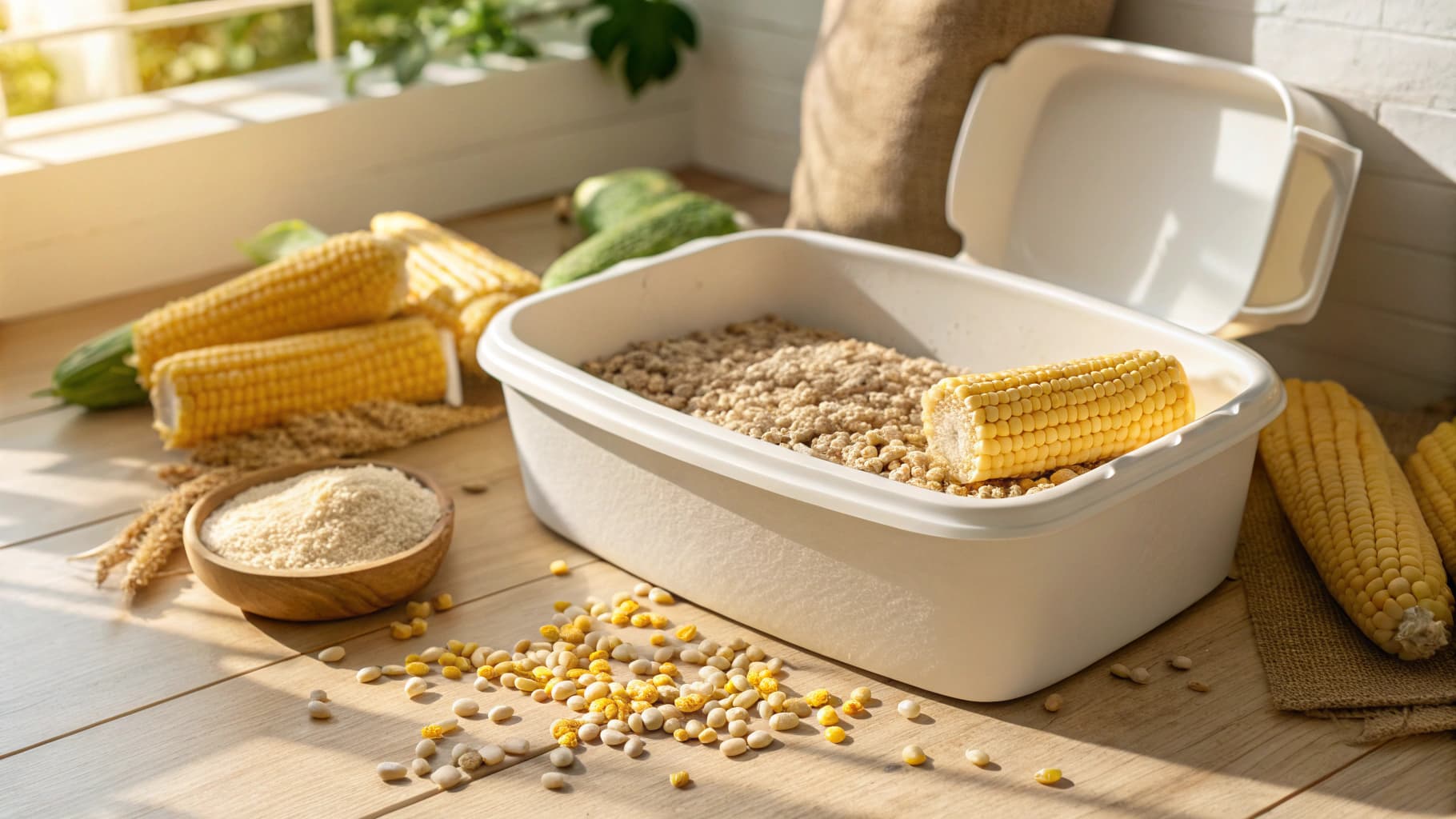
Corn Cat Litter: Natural Clumping Power
Made from whole-kernel corn, this litter offers clay-like clumping with the safety of a food-grade ingredient.
Quick Facts
What is Corn Cat Litter?
Corn cat litter is made from whole-kernel corn that's been ground and processed into granules. The natural starches in corn create excellent clumping properties, while the fibrous material absorbs moisture effectively.
Most corn litters use corn that's been specifically processed for pet products—not the same corn used for human food or animal feed. This ensures consistent quality and performance while utilizing agricultural resources efficiently.
This circular use of agricultural feedstocks aligns with broader waste-reduction frameworks from EPA Sustainable Materials Management and Environment and Climate Change Canada.
Why Cats Love Corn Litter
Of all eco-friendly litter types, corn often has the highest acceptance rate among cats. Here's why:
- Familiar texture: The granule size and feel closely mimics fine-grain clumping clay, making the transition nearly seamless for most cats.
- Soft on paws: Corn granules are gentler than clay or wood pellets, which senior cats and declawed cats especially appreciate.
- Neutral scent: Unlike wood or paper litters, corn has a very mild, non-offensive smell that doesn't deter sensitive cats.
- Natural digging: The texture allows for satisfying digging and burying behaviors that are instinctual for cats.
Clumping Performance
Corn litter's clumping ability is one of its standout features. The natural starches in corn act as binding agents, creating firm clumps that:
- Form quickly upon contact with moisture
- Hold together when scooped (no crumbling)
- Don't stick to the bottom of the litter box
- Allow easy separation from clean litter
Many users report that corn litter clumps as well as—or better than—premium clay clumping litters. This means less waste during scooping and better value per bag.
Pros and Cons
Advantages
- Excellent clumping
- Easy transition from clay
- Flushable (septic-safe)
- Very low dust
- Safe if ingested
- Lightweight
- Biodegradable
Disadvantages
- Can attract bugs if wet
- Higher price than clay
- Aflatoxin concerns (rare)
- Moderate odor control (tip: add an unscented activated carbon supplement for extra freshness)
- Some tracking
A Note on Aflatoxins
Some pet owners worry about aflatoxins—toxins produced by mold that can grow on corn. Reputable corn litter manufacturers test for aflatoxins and use processes that prevent mold growth. However, always store corn litter in a cool, dry place and discard any that gets wet or develops an off smell. If your cat tends to eat litter, consult your vet about the best option.
Flushability and Disposal
One of corn litter's biggest conveniences is that most brands are flushable. The corn breaks down in water, making it safe for most sewage systems. However, there are important caveats:
- Check your septic system: While corn litter is septic-safe, older systems may not handle regular flushing. When in doubt, stick to composting or trash disposal.
- Flush small amounts: Don't flush entire clumps at once. Break them up and flush with plenty of water.
- Never flush feces: Cat feces can contain Toxoplasma gondii, a parasite that water treatment doesn't fully eliminate. Always dispose of solid waste in the trash.
- Local regulations: Some areas prohibit flushing any cat litter. Check your local guidelines and public utility rules, and review EPA disposal guidance for safer alternatives.
Boosting Odor Control
Corn litter's odor control is good but not exceptional compared to clay or wood. If you find odors becoming an issue, especially in multi-cat homes:
- Scoop more frequently—at least twice daily for multiple cats
- Add an activated carbon supplement to the litter box
- Ensure adequate litter depth (3-4 inches)
- Replace all litter completely every 2-3 weeks
Who Should Choose Corn Litter?
Corn litter is an excellent choice for:
- First-time eco-switchers: The familiar texture makes the transition easy for both cats and owners.
- Picky cats: High acceptance rate means fewer litter box avoidance issues.
- Apartment dwellers: Flushability means no trips to the dumpster with smelly bags.
- Households with kittens: Safe if accidentally ingested during the curious kitten phase.
Corn vs. Other Grain-Based Litters
Corn isn't the only grain-based option. Here's how it compares:
Corn vs. Wheat: Both clump well, but wheat has natural enzymes that may control odors slightly better. Corn typically has a finer texture.
Corn vs. Grass: Grass litter is newer to the market and often has better odor control, but corn is more widely available and usually more affordable.
If compostability certification is important to you, cross-check brand claims against Biodegradable Products Institute (BPI) listings and manufacturer documentation.