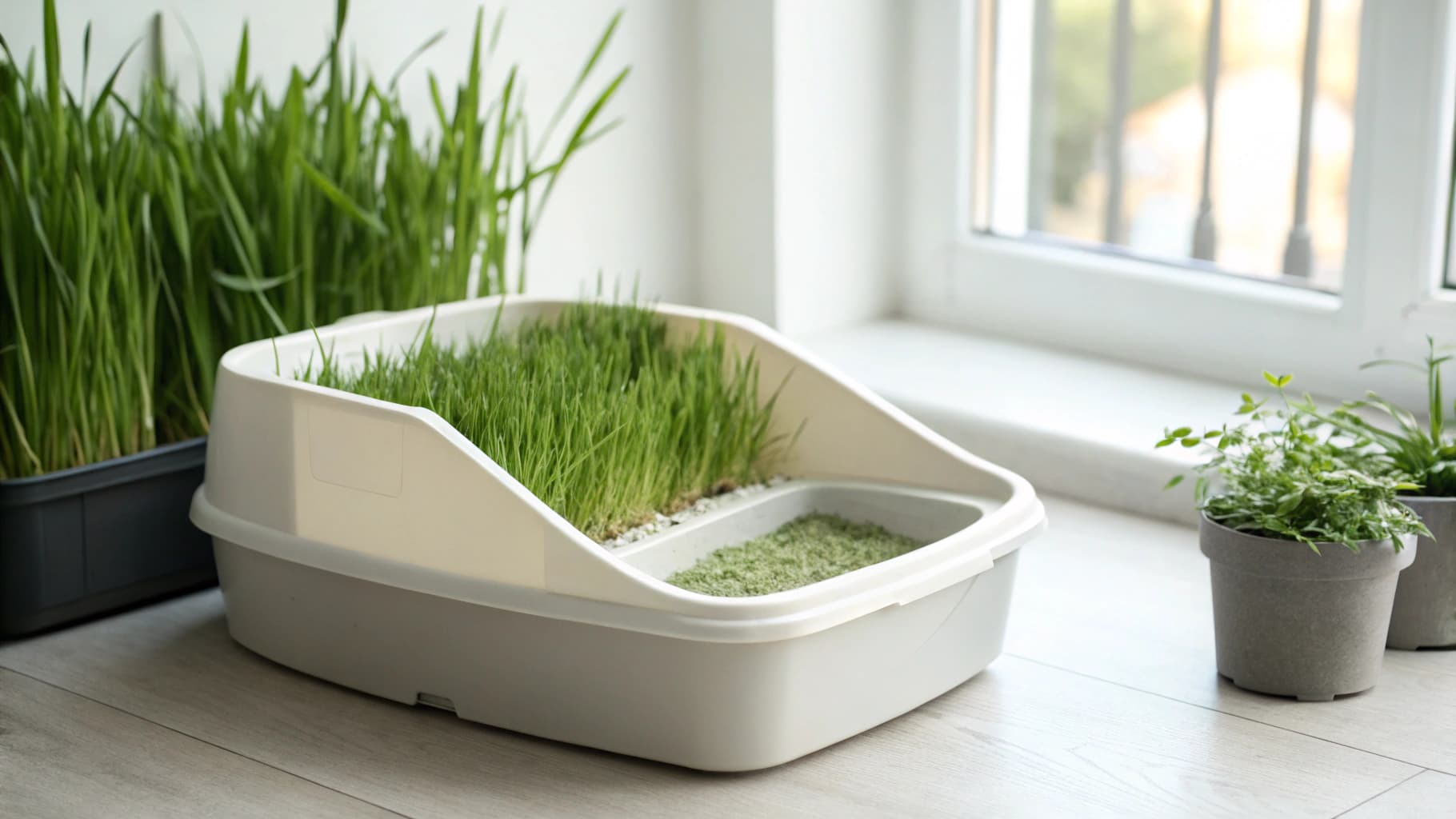
Grass Cat Litter: The New Generation
Made from grass seed fibers, this newcomer combines the best traits of other eco-litters while cats seem to love it instinctively.
Quick Facts
What is Grass Cat Litter?
Grass cat litter is made from the fibrous part of grass seeds—typically from grass grown specifically for seed production, not your lawn clippings. The seeds are harvested, the useful grass seed extracted for landscaping use, and the remaining fibers processed into cat litter.
This relatively new category emerged in the mid-2010s and has quickly gained a devoted following. While less established than corn or wood litters, grass litter has impressed users with its performance across multiple metrics.
Why Cats Love Grass Litter
Many cat owners report unusually high acceptance rates when switching to grass litter. The theory? Cats evolved as grassland hunters. The soft texture and subtle vegetal scent of grass litter may appeal to deep instincts. Whatever the reason, picky cats that reject other alternatives often accept grass litter readily—sometimes preferring it to their old clay litter immediately.
Performance Highlights
Grass litter tends to excel across the board:
- Clumping: Forms very tight, solid clumps that don't crumble during scooping. Clumps form quickly and hold together well.
- Odor control: Among the best of any eco-friendly option. Natural plant fibers absorb and neutralize odors effectively. For even stronger results, some owners add an activated carbon supplement to their litter box.
- Dust: Minimal dust during pouring and scooping—a major improvement over many clay litters.
- Weight: Very lightweight, often 50-70% lighter than clay. Easier to carry, pour, and dispose of.
- Longevity: Many users report grass litter lasts longer than equivalent amounts of other litters.
Pros and Cons
Advantages
- Excellent odor control
- Superior clumping
- Very low dust
- Lightweight
- Cats often love it
- Flushable
- Fast biodegradation
Disadvantages
- Highest price point
- Limited availability
- Fewer brand choices
- Some tracking
- Newer, less track record
Environmental Benefits
Grass litter has impressive environmental credentials:
- Fast-growing resource: Grass grows much faster than trees and requires less water than many crops.
- Uses byproduct: The litter is made from seed husks that would otherwise be waste after seed harvest.
- No harmful additives: Most grass litters are pure plant fiber with no chemicals, fragrances, or synthetic binders.
- Rapid biodegradation: Grass fibers break down faster than most other organic litters when composted.
- Carbon neutral to negative: Growing grass absorbs CO2, and the short production cycle keeps the carbon footprint minimal.
How Grass Compares to Other Grains
Against corn and wheat, grass holds its own:
Odor control: Grass typically outperforms corn and matches or beats wheat's enzymatic action.
Clumping: All three clump well, but grass clumps tend to be the tightest and least likely to break apart.
Cat acceptance: Grass seems to have the highest acceptance rate, possibly due to instinctual preferences.
Price: Grass is typically the most expensive of the grain-based options, though prices are dropping as production scales up.
Allergies: Grass is gluten-free and generally hypoallergenic, making it suitable for households with grain sensitivities.
The Price Question
Let's address the elephant in the room: grass litter costs more than most alternatives. A bag that costs $15 in corn litter might cost $25-30 in grass.
However, many users find the value proposition works out:
- The litter often lasts longer, needing fewer complete changes
- Better odor control means less need for supplements or frequent scooping
- High cat acceptance prevents the waste of rejected litter
- Lightweight bags are easier to manage, reducing frustration
For households where budget is less important than performance and environmental impact, grass litter is often worth the premium.
Transitioning to Grass Litter
Good news: most cats transition to grass litter easily. Many will use it without any gradual transition. But if your cat is change-resistant:
- Start with a 25/75 grass/old litter mix
- Increase grass content every few days
- Most cats fully transition within 1-2 weeks
- Keep the litter box location consistent
Best Uses for Grass Litter
Grass litter is ideal for:
- Picky cats: If your cat has rejected other eco-litters, try grass before giving up.
- Multi-cat households: Superior odor control handles heavy use.
- Small living spaces: When the litter box is in a main living area, premium odor control matters.
- Sustainability-focused owners: For those willing to pay for the best environmental option.
- Allergy-conscious homes: Low dust and hypoallergenic properties benefit sensitive cats and humans.
Finding Grass Litter
Grass litter isn't yet as widely distributed as corn or wood options. You'll typically find it at:
- Specialty pet stores
- Natural/organic grocery stores
- Online retailers (often with subscription discounts)
- Some large pet chains in their eco-friendly sections
As demand grows and production scales, expect wider availability and potentially lower prices in the coming years.