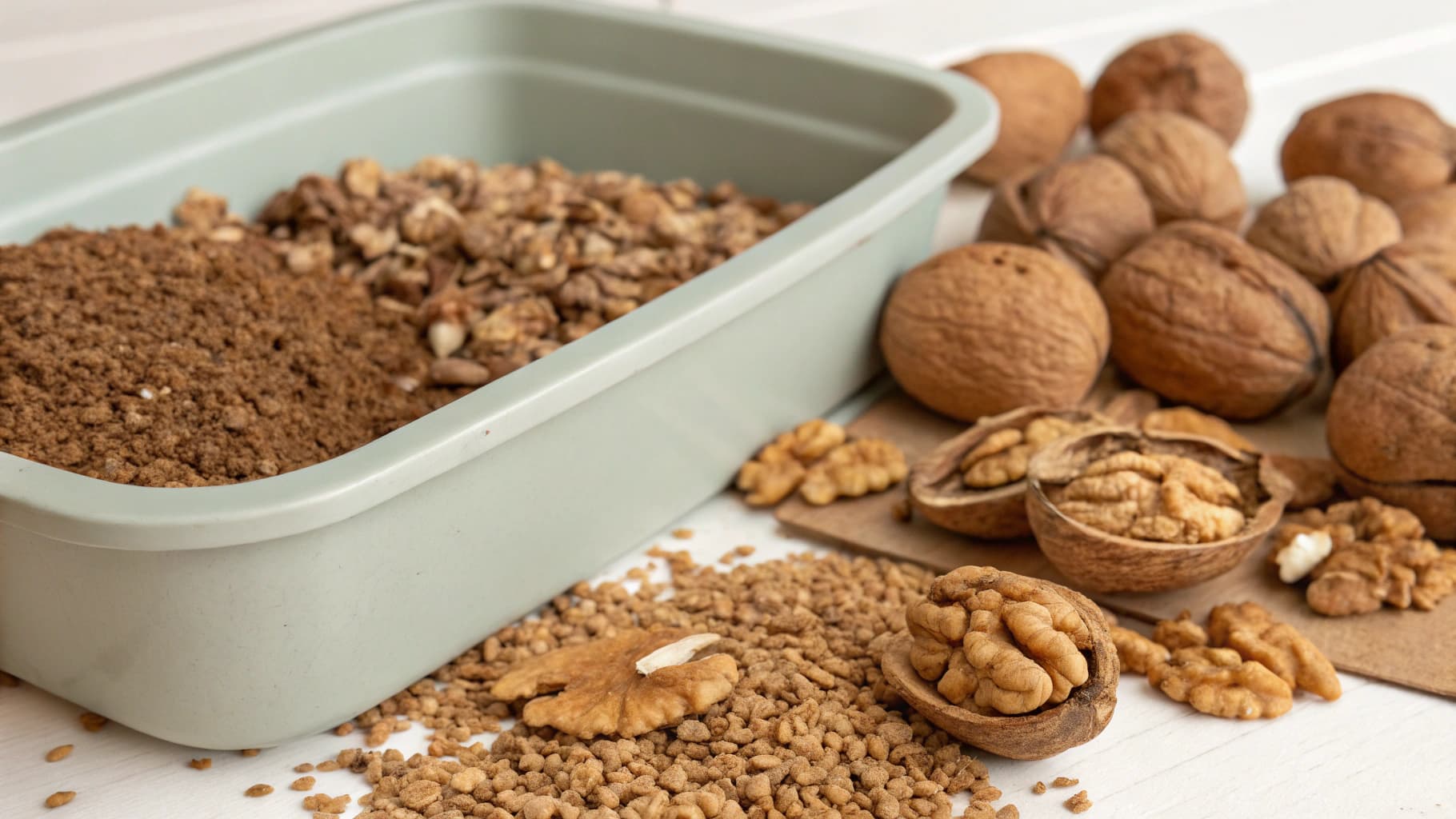
Walnut Cat Litter: Nature's Odor Fighter
Crushed walnut shells deliver some of the best natural odor control available, turning agricultural waste into a premium cat litter.
Quick Facts
What is Walnut Cat Litter?
Walnut cat litter is made from crushed walnut shells—the hard outer casing that's typically discarded during walnut processing. Rather than becoming waste, these shells are ground, processed, and transformed into one of the most effective natural cat litters available.
The United States is a major walnut producer, particularly California, which means walnut litter often has a shorter supply chain than imported alternatives. This byproduct approach exemplifies sustainable manufacturing: what was once waste becomes a valuable product.
The Dark Color Advantage
Walnut litter is naturally dark brown—and this is actually a feature, not a bug. The dark color hides stains and discoloration that would be obvious in white or light-colored litters. Many cat owners find this more aesthetically pleasing than watching their light litter gradually turn yellow. The trade-off is that dark litter makes it harder to monitor your cat's urine color, which can be an early indicator of health issues.
Why Walnut Excels at Odor Control
Walnut shells have natural properties that make them exceptional odor fighters:
- High absorption: The fibrous structure of walnut shells absorbs liquid quickly and holds it, preventing pooling that causes odors.
- Natural tannins: Walnuts contain tannins—the same compounds found in wine and tea—that have natural antimicrobial properties.
- Ammonia neutralization: The chemical composition of walnut shells helps neutralize ammonia, the primary cause of litter box smell.
- No masking fragrances: Unlike clay litters that rely on added scents, walnut controls odors at the source rather than covering them up.
Many cat owners who switch to walnut from clay report being surprised at how well it controls odors—often better than premium scented clay litters. For households with particularly sensitive noses or multiple cats, adding an activated carbon supplement alongside walnut litter creates an even more powerful odor-fighting combination.
Pros and Cons
Advantages
- Exceptional odor control
- Strong, tight clumps
- Dark color hides stains
- Very absorbent
- Uses agricultural waste
- Low dust
- Long-lasting
Disadvantages
- Dark color hides health indicators
- Not safe for nut allergies
- Higher price point
- Can track (fine particles)
- Unfamiliar to some cats
- Not flushable
Nut Allergy Warning
If anyone in your household has a tree nut allergy, walnut litter is not recommended. While cats are not typically allergic to tree nuts, humans with nut allergies may react to airborne particles when pouring or scooping the litter. If you're unsure, consult with your allergist before using walnut-based products in your home.
Clumping Performance
Walnut litter forms firm, tight clumps that hold together well during scooping. The clumps tend to be slightly heavier than clay clumps of the same size due to walnut's density, but they break apart less often.
Tips for best clumping performance:
- Maintain 3-4 inches of litter depth for clumps to form properly
- Wait 5-10 minutes after your cat uses the box before scooping—this allows clumps to fully form
- Use a sturdy metal scoop; plastic scoops can struggle with walnut's weight
Comparing Walnut to Wood
Both walnut and wood litter use agricultural/forestry byproducts, but they perform differently:
Odor control: Walnut generally has better odor control than pine, though both outperform most other eco-friendly options. Walnut neutralizes while pine masks.
Clumping: Walnut clumps; most wood litters (pellets) don't. Clumping wood varieties exist but are less common.
Price: Walnut is typically more expensive than wood pellets, which can be extremely affordable when bought as horse bedding.
Texture: Walnut has a finer, more familiar texture; wood pellets are larger and require more adjustment from cats used to clay.
Best Uses for Walnut Litter
Walnut litter particularly shines in these situations:
- Multi-cat households: The superior odor control handles heavy use well.
- Small spaces: When the litter box is in a main living area, odor control matters more.
- Odor-sensitive owners: If you've struggled with litter box smell despite regular cleaning, walnut may be the answer.
- Cats who prefer fine textures: The granule size is closer to premium clumping clay than other eco-options.
Transitioning to Walnut
The dark color can initially startle some cats. Here's how to make the switch smoothly:
- Start with a thin layer of walnut under your current litter
- Increase walnut and decrease old litter over 2 weeks
- Consider mixing with a lighter eco-litter if your cat is very resistant
- Keep the litter box in the same location during transition
Health Monitoring Considerations
Because walnut litter is dark, it can be harder to notice changes in your cat's urine color—an important health indicator. If your cat has a history of urinary issues, or if you want to monitor for health problems:
- Consider keeping one box with lighter-colored litter for monitoring
- Learn to look for other signs of urinary issues (straining, frequency changes)
- Schedule regular vet check-ups that include urinalysis