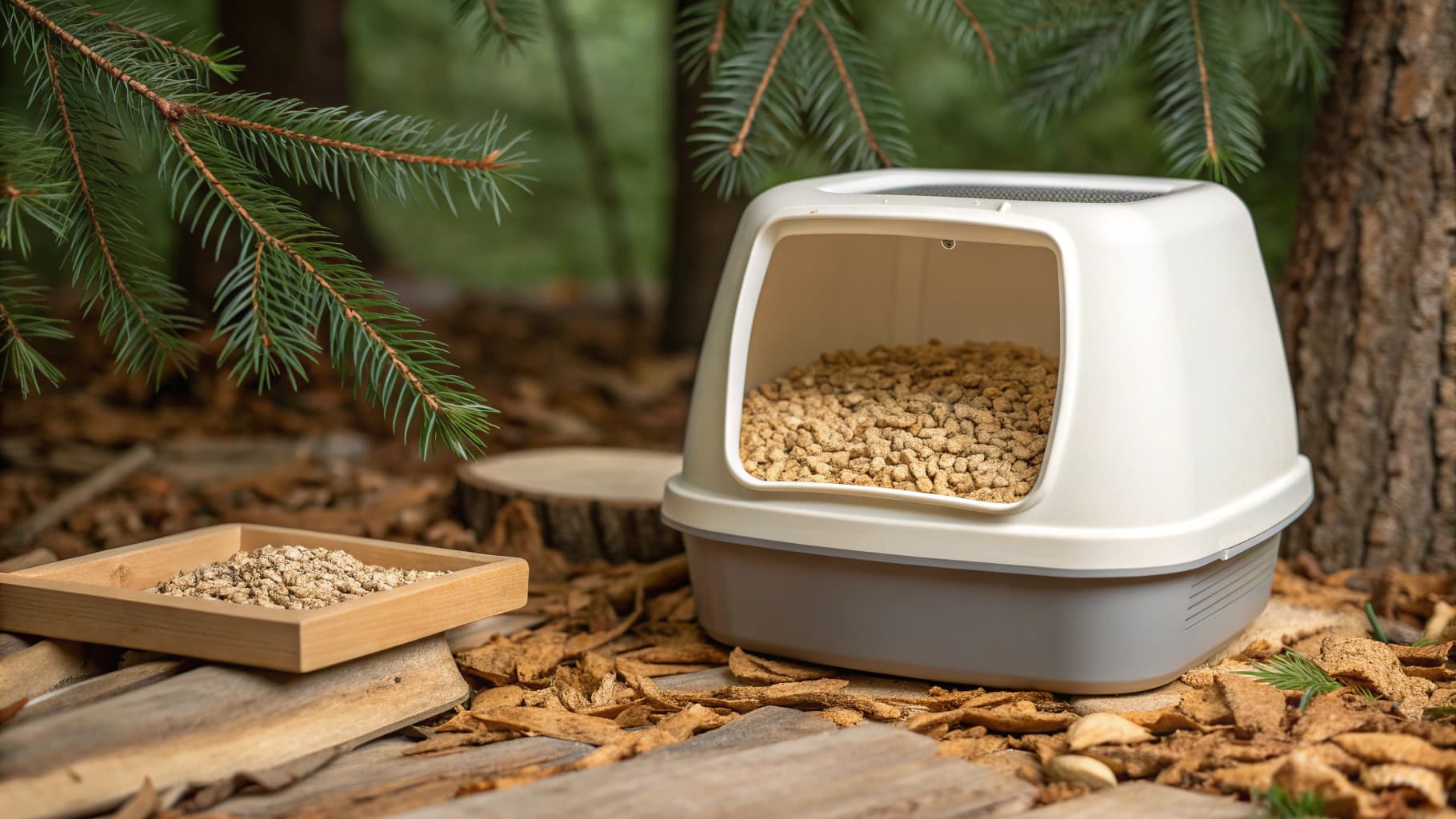
Wood Cat Litter: Pine, Cedar & Sawdust Options
Wood litter turns lumber industry byproducts into powerful, natural odor fighters for your cat's litter box.
Quick Facts
What is Wood Cat Litter?
Wood cat litter is made from compressed sawdust, wood shavings, or processed lumber byproducts—primarily pine, cedar, or mixed softwoods. Rather than ending up in landfills or being burned, these materials get a second life in your cat's litter box.
Wood litter comes in several forms: compressed pellets that break down into sawdust when wet, loose shavings, and newer clumping varieties made from fine wood fibers. Each has distinct characteristics and best-use cases.
From a sustainability perspective, this reuse pathway helps divert industrial wood byproducts from disposal streams documented in EPA materials and waste reports and supports waste-reduction goals outlined by Environment and Climate Change Canada.
Types of Wood Litter
Pine Pellets: The most popular wood litter variety. These compressed pellets absorb urine and crumble into sawdust. Pine's natural oils neutralize ammonia odors remarkably well. Often the most affordable eco-friendly option—some people even use horse bedding pellets (same product, bigger bags, lower price).
Cedar Shavings: Cedar contains natural oils that repel insects and neutralize odors. The distinctive cedar scent is pleasant to most humans but can be strong. Some cats may need time to adjust to the aroma.
Clumping Wood Litter: Newer formulations use fine wood fibers treated to clump like traditional clay. These offer the familiar scooping experience while maintaining wood's natural benefits.
Mixed Softwood: Some brands blend various wood types or use reclaimed construction lumber. Check that any mixed-wood product is untreated and chemical-free.
How Pine Pellets Work
Pine pellet litter works differently than traditional clumping clay:
- Absorption: When urine hits a pellet, the compressed sawdust expands and absorbs the liquid.
- Breakdown: The pellet crumbles into loose sawdust as it absorbs moisture.
- Odor neutralization: Pine's natural phenols chemically neutralize ammonia, the primary cause of litter box odor.
- Sifting: Many users employ sifting litter boxes—intact pellets stay on top while sawdust falls through for easy removal.
Pros and Cons
Advantages
- Excellent natural odor control
- Very affordable (especially pellets)
- Sustainable and renewable
- Low tracking (pellets)
- Pleasant natural scent
- Compostable
- Uses waste material
Disadvantages
- Different texture than clay
- Pellets don't clump
- Requires sifting system
- Some cats dislike scent
- Sawdust can be messy
- Not flushable
The Odor Control Science
Wood litter's odor control isn't just about covering up smells—it's chemistry. Pine and cedar contain natural compounds called phenols and plicatic acid that actively neutralize ammonia at the molecular level.
This is why many cat owners report that wood litter controls odors better than even premium clay litters with artificial fragrances. The clay approach masks odors; wood eliminates them.
For households wanting to boost wood litter's odor control even further, an activated carbon supplement can capture any remaining odor compounds. The combination of natural wood phenols and activated carbon creates an exceptionally fresh-smelling litter box.
Safety Considerations
Wood litter is generally very safe, but keep these points in mind:
- Kiln-dried is essential: Proper heat treatment removes harmful bacteria and reduces the strongest aromatic compounds. Never use fresh sawdust directly.
- Avoid treated wood: Only use products specifically made for pet use. Construction lumber may contain preservatives or chemicals.
- Cedar sensitivity: Some cats (and humans) are sensitive to cedar's strong aromatic oils. If your cat sneezes or avoids the box, try pine instead.
- Phenol concerns: While modern pet-safe wood litters have phenol levels too low to cause harm, cats with liver issues should use non-aromatic options.
Transitioning to Wood Litter
The texture difference between clay and wood pellets is significant, so patience is key:
- Start by adding a thin layer of pellets under your current litter
- Gradually increase the pellet layer while decreasing the clay over 2-3 weeks
- Consider a clumping wood variety if your cat really resists pellets
- Keep the same litter box depth—cats notice when things feel different underfoot
Best Uses for Wood Litter
Wood litter shines in certain situations:
- Budget-conscious households: Pine pellets are among the cheapest eco-friendly options, especially bought in bulk as horse bedding.
- Multi-cat homes: The strong natural odor control handles high-volume use well.
- Allergic cats or owners: No silica dust means easier breathing for everyone.
- Composters: Used wood litter (minus feces) makes excellent brown material for compost piles. If you want third-party compostability benchmarks for related materials, use the Biodegradable Products Institute directory as a reference point.